Monday, May 28, 2007
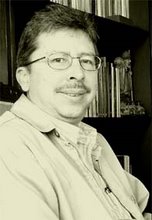
By Harold Segura
I was told that on Monday I would participate in the Eucharistic celebration as the reader for one of the scripture passages, but even last night this had not been confirmed. Anyway, I got prepared for the event. I got up earlier than usual (despite the inclement cold), I opened the window to see nothing but the fog, I prepared my dark blue suit, brushed my shoes, adjusted the necktie knot, took breakfast quickly and made off towards my duty. With a sacristan’s pause I walked down the two-hundred-meter ramp leading from the square of the Old Church to the Basilica of Our Lady. This walk can even be a spiritual experience, as long as the sun rises, the birds sing and you can see the majestic dome of Aparecida on the horizon. But today’s cold couldn’t make this anything more than a sacrifice for unity. On the way I found Fr. Efraín Martínez Delgado (Mexico), in charge of coordinating the liturgy during these days, who confirmed my participation and thanked me beforehand.
“So what am I supposed to do, Father?”, I asked.
“Oh no, be calm; just read. We’ll meet at the Basilica and I’ll tell you what the passage is,” he answered.
Well, I said to myself, a reading is just a reading and I have experience. Just tune up my voice (I am betrayed by cough every once in a while), look attentively at the text (my bi-focal glasses can deceive me), do it with the well-known priestly pause (no dramatizing, no Protestant accent) and lift up my eyes from time to time (this I learned in Seminary). Haven’t I been a teacher of Homiletics and taught how to read in public?, I continued to reflect.
A few minutes before the mass began, Fr. Martínez told me not to use my book of Liturgical Celebrations, the red 647-page book we had been given the first day. You will find the book on the lectern, he said, open on the page of the scripture text corresponding to today’s mass. Well, all I did before performing my duty was to read the appointed passage and review the general order of the liturgy. First surprise: this mass is celebrated in the honor of Our Lady of Guadalupe. Second surprise: the text I’m supposed to read is from a deuterocanonical book, Ecclesiasticus (Sirach) 24:23-31. Third surprise: at the end of the reading I have to say “The Word of God.” What will my evangelical brothers and sisters say when they see me on TV? Hopefully the joy of seeing me on the screen (because there still are some who rejoice at these small things) will hide from them the fact that I’m reading from the Apocrypha… or hopefully they will mistake Ecclesiasticus for Ecclesiastes. We’ll see, I said, calling on the help of the Holy Spirit.
The mass started at 8:00 a.m. The celebrant was Bishop Carlos Aguiar Retes (Mexico) with two other bishops, Jorge Enrique Jiménez Carvajal (Colombia) and Adalberto Martínez Flores (Paraguay). The choir with more than one hundred voices was, as always, perfectly tuned; the TV people again on their positions; the Cardinals in front, in the first concentric circle, the Bishops in the second, then the laypeople, the experts, the religious brothers and sisters and the observers in the third. When my turn came, I read.
At the end, at 8:50 a.m., when the liturgy was over, the first person to come and greet me was Fr. Víctor Manuel Fernández, Vice-Dean of the Faculty of Theology of the Catholic University of Argentina, UCA. “I realized it already—you did a big ecumenical effort in reading from a deuterocanonical book and saying at the end, ‘The Word of God.’” Once at the Assembly, Cardinal Giovanni Battista Re, also a President of this Conference, approached me to say thank you for the reading.
“You did it very well,” he said with his always kind Italian smile.
“But Your Eminence,” I said, “this was a trap to me!” And I explained to him what had happened, in case he hadn’t noticed.
So now let me explain what really happened. I am entitled to lawful defense. How can I explain to my evangelical family this “Word of God” tag applied to one of the Apocrypha? Well, this is something I also learned when I was a teacher of Homiletics (being a teacher has to be of some use). When an affirmative sentence is read with a slight elevation of the intonation at the end of the last word, the affirmation becomes an interrogation. So I didn’t say “The Word of God”, but “The Word of God?”. And it’s not my fault if, to my question, everybody responded, “We praise you, Lord.”
Cardinal Giovanni Battista Re, was this a trap to me? Or was this my trap to you? All for the sake of unity! We praise you, Lord.
Harold
martes, 29 de mayo de 2007
 THE WORD OF GOD? WE PRAISE YOU, LORD

THE “HUBBUB” OF THE SPIRIT
Sunday, May 27, 2007
By Harold Segura
Fifty days after Easter, as the Christian calendar indicates, the feast of Pentecost is celebrated. This is why the Eucharist this Sunday was even more solemn and lasted longer (one hour and forty-five minutes). All the bishops wore their miters and their vestments were more splendorous. Even the basilica looked better without any empty seats and with many pilgrims who came from different parts of Brazil. Many of them stayed there all night, from 11:00 p.m. yesterday to 6:00 a.m. today, participating in the Vigil that was held for this special occasion. They sang all throughout the night (I could hear them from my room), and sometimes they cheered the Virgin and used fireworks, despite how cold the place must have been (around 4º or 6º C, i.e. 39º or 42º F).
The liturgy was led by three cardinals—Eusebio Óscar Scheid (Brazil), Pedro Rubiano Sáenz (Colombia) and Juan Sandoval Íñiguez (México)—and was celebrated in Portuguese. The scripture passage of Acts was read by a Brazilian religious sister. She captured my attention when she read verse 2 (“Suddenly a sound like the blowing of a violent wind came from heaven and filled the whole house where they were sitting”), because the word standing for “sound” was the Portuguese term barulho, akin to the Spanish barullo. In Colombia and other countries we use barullo to designate a hubbub, noise or disorder. Once in the hotel I looked in the dictionary, and both the Portuguese barulho and the Spanish barullo had the same meaning. I then reflected on that word, “hubbub”, as applied to the Holy Spirit. I would have never used myself, mainly because in some places this is such a colloquial term that you wouldn’t use it when talking about God.
God causing a hubbub? In fact I liked it. Especially when I contrasted it to the impeccable order in which the liturgy was taking place. The Catholic Church, like many historic Protestant churches, is a model of order and control. They lack the hubbub which we criticize in effusive Pentecostalism (where, in fact, the hubbub is too much).
Several speeches by the Bishops who intervened in the first few days said they hoped this Conference to be a new Pentecost. For example, the Bishops’ Conference of Costa Rica titled its short five-minute report, “Aparecida, a Pentecost for the Church.” I have repeatedly heard expressions like “we want new people for new structures”; “we want the Spirit to tell us what are the new directions for us to follow”; or “we require a pastoral conversion in an evangelizing keynote.” All of these expressions are loaded with desire for change, for going further, for “putting out into the deep”, as the representative of the Argentinean Bishops’ Conference said.
For the time being, it seems to me, everything will remain in an orderly shape. I think that, while Aparecida will in fact usher in some important novelties, it will not be able to cause the stronger winds that would make the whole house tremble (Acts 2:2). Lay ministries will not advance to a point that would cause noise; women will not be granted the official right to participate the way they desire; the preferential option for the poor will remain as a decoration in the Final Document; the dream for a cultural re-conquest will become more important than the need to adapt to the new plural and diverse reality; as far as celibacy, nothing will be said (even though in Brazil, for instance, there’s a growing number of “married priests”); in sum, the house will be kept in order and the winds will not make it tremble.
For now, then, everything will remain under control. Let the barulho go somewhere else.
Harold
ARCHBISHOP ROMERO WAS BRIEFLY WITH US
Saturday, May 26, 2007
By Harold Segura
The Eucharistic celebration of yesterday, Friday, was the responsibility of Bishop Álvaro Leonel Ramazzini of San Marcos, Guatemala, who, because he was sick, delegated it on his fellow countryman Bishop Julio Cabrera, of Jalapa. Ramazzini is one more of several participants who haven’t been able to leaver their hotels due to what is now called “the virus of the Fifth”—in reference to the Fifth Conference. Cardinal Alfonso López Trujillo (Colombia), the Pope’s delegate, has been in bed for two days now; the same applies to Bishop Plácido Rodríguez of Las Cruces, United States. Other sick participants are at the Assembly, spreading their virus in an involuntary proselytism (to use church language).
I had the honor of meeting Ramazzini last year, when he was very kind to accept an invitation we made from World Vision to accompany us in an international encounter. He traveled from San Marcos to Antigua Guatemala to speak to us about social justice—but not in his theory, but in his pastoral practice that has been so broad and courageous. He has been repeatedly threatened because of his commitment to the peasants in his diocese. He organized a Pastoral Project on Land in order to advice small farmers, whom he is requesting to hold discussions with the Agricultural Chamber in order to reach equitable agreements on the issues of melon, cardamom and other products whose marketing has caused serious conflict. He has also raised his voice in favor of the people when the United States presses for the destruction of the poppy crops, the work source for the poorest. He is a threatened bishop and his people know why.
Manfred Grellert (former Vice-President of World Vision), who was in Antigua when Ramazzini visited us, said to me, “I like this guy. He speaks with the force of those bishops I thought were no longer in stock.” Manfred was referring to the generation of Leonidas Proaño in Ecuador, Samuel Ruiz in Mexico, Helder Câmara and Pedro Casaldáliga in Brazil, Gerardo Valencia Cano in Colombia, and, of course, Óscar Arnulfo Romero in El Salvador.
So when I learned that Ramazzini would be in charge of the celebration I prepared for his homily. Even though he was not present—a pity—he sent the homily, which was read by Bishop Cabrera. The scripture passage was John 21:15-19, where Jesus asks Peter three times if he loves him. He didn’t use the text to speak about Peter’s authority—he preached about the love that Jesus requires of his pastors. Love of God and love of neighbor—and the latter expressed in humility, service and fight against injustice and poverty. He spoke about the radical following of Jesus, and ended with two examples of radicalness—Archbishop Óscar Arnulfo Romero and Bishop Juan Gerardi Conedera, “whose life was Christ, and they gave their lives for him.” I wanted to applaud. (The full text of the homily can be found at http://www.celam.info/content/view/399/344/ )
Archbishop Romero was briefly with us, hand in hand with Gerardi, but not to everyone’s liking. By the way—how deep is the influence of that generation of prophets on this Conference? What is left in Aparecida of the “preferential option for the poor”? I’m not in a condition to calculate that presence. I can only perceive that it is deeper than the conservatives want, but not as much as the Continent needs. There are evident polarizations. For example, at my right hand sits a German bishop who gets excited whenever someone says “Grassroots Ecclesial Communities” (he met them in his passing by Peru when he served as a bishop there); whereas at my left sits the President of the Pontifical University of the Holy Cross, in Rome, an Argentinean priest who introduced himself to one of us on the first day as a member of Opus Dei. There are marked differences not only in the political field, but also in ethical stands, in the lines of pastoral action and in the forms of recognizing the new place of the Catholic Church in the Continent.
Of Romero and his generation, enough is left for longing and hope. There are some who are attentive to ensure that some “key issues for theology and pastoral work in Latin America and the Caribbean” will not be absent from the final document—a reading of reality as a prior step to theological development, the references to life, the presence and action of women, the centrality of the Kingdom, of the laity, of the indigenous population and the descendants of Africans. There’s also a group of almost 30 theologians and Bible scholars (Grupo Amerindia), with headquarters five blocks from the basilica, who are advising several bishops. This work they do with enthusiasm and high commitment. Today, for instance, they handed to us the first draft of the “Message to the peoples of Latin America and the Caribbean”, a four-page document that will be issued at the end of the Conference, different from the final document, and which will surely be more widely disseminated than the latter. They have given it for us to read this weekend and to discuss it on Monday. In my first reading I can recognize the influence of “progressive” people. On Monday, then, the strength of each group will be measured when the text is voted or changes are requested.
Romero was briefly with us.
Keep us, dear Archbishop, from the insensitivity of those who think that what we have to save is the Church.
Encourage those who are forging the Kingdom. There are still enough of them around.
Keep us, you who taught that “Being the Church is keeping in history, throughout the centuries, the figure of Jesus Christ.”
If possible, stay a little longer.
Harold
FLOWING SPEECH AND EASY PEN
Friday, May 25, 2007
By Harold Segura
I have always admired the speech ability of most priests and their skill for writing. So much the more if they are Cardinals or Bishops, who have an exquisite academic training and have enjoyed privileges accessible to very few, at least in these lands of the New World. Many of those participating in this Conference have read the classics in their original languages—Cicero in Latin and Aristotle in Greek; not few of them read Pascal in French, Bacon in English and Hegel in German. As I talked with one of the Spanish bishops, he was telling me that he learned classical Greek before biblical Greek (the koiné) and that he studied in Latin when he was an assistant to a parish priest in Switzerland. With great naturalness they tell about their studies under the shade of Karl Rahner, Yves Congar, Henri de Lubac, Hans Urs von Balthasar and even Joseph Ratzinger himself, when he was a professor at the University of Bonn. The founders of Latin American liberation theology drank from these same sources and enjoyed these privileges—this has been an elite of enlightened pastors, with the good and bad things this can involve. But I was referring to my admiration for their flowing speech and their easy pen. These days, every public presentation has been given with the purest style and, when writing, they all do so very easily, despite time pressures. On Tuesday morning the redaction work started, and yesterday, Thursday, by noon, we already had 86 written pages with the first draft of the final document. It is true that much revision and editing work is needed, but something formal already exists, which will be the basis for work in the following days. I think the final document will be a book with close to 150 pages. One of the Presidents announced yesterday that its length could be about one third of the one published in Puebla (1979).
This is a Church whose leaders speak well, write quickly and think with a certain depth, but—can they communicate? It is one thing to write well, from the perspective of the redactor, but from the viewpoint of the reader, understanding the text is a different thing. We are here, no longer in the terrain of language but in that of pastoral work. At this time, while the moderators and speakers from the seven groups left the hall for a meeting, the rest of us are listening to responses to the draft document. Several minutes ago we listened to Bishop José Francisco Ulloa (Costa Rica) asking the Assembly what to do to make sure that the document “will not risk ending up in the files.” He said he admired some paragraphs that were “so nicely worded,” but he thought they would not inspire conversion. The bishop suggested to attach “innovative pastoral lines” to each chapter. Another speaker was Professor Ana María Fons Martin, National Director of the Laity in Venezuela, who pointed to the urgency of saying things and living life in such a way that the Church “may re-enchant the world with Jesus Christ, to make possible an encounter with Him.” All this shows that there are concerns about the document, not for the propriety of the language but for its pastoral relevance.
What we need to hope will happen here is what we should also hope for in all other Christian churches and organizations that are interested in drafting lines of pastoral action—that the depth of the Truth will be written in a simple manner, so that the simplicity of the Gospel might be lived with actual depth. Is this a new way of understanding the old dichotomy between orthodoxy and orthopraxis? In the meantime, here I am, next to three bishops—Castrellón Pizano (Colombia), Eguren (Peru) and Rueda (Colombia)—and a layman, Daniel Casco (Paraguay), trying to draft the chapter on youth and children.
Harold
SOME GREGORIAN CHANT AND A LOT OF FRIENDSHIP
Thursday, May 24, 2007
By Harold Segura
Today, like everyday, we left the hotel at 7:15 a.m. in order to arrive at the Basilica 15 minutes later. The Eucharistic celebration —solemn, formal and with all the adornments that this kind of occasion deserves— starts at 8:00 a.m. How would I have liked to witness something similar to this when I was a child! But I, a neighborhood Catholic (I was a Catholic until I was 18)—the most impressive thing I could ever get was the mass before dawn on Easter Sunday, plus an occasional solemn mass like for the perpetual vows of a nun who was my mother’s friend, or the funeral of a priest who was my father’s friend. As far as hierarchical rank, I didn’t go beyond being an amateur altar boy at the Church of St. Francis in Cali, Colombia.
Between 7:30 and 8:00 a.m. there’s time for the Cardinals, bishops, priests and deacons to go down to the basement to look for their liturgical vestments and get ready for the entrance procession. Everything happens in perfect order. There’s no room for improvisation. The chasuble, the bishop’s cap (red or purple, depending on the rank), the alb, the stole and the red liturgy book. At the Mass, everything is in full order. Well-read prayers, well-intoned Gregorian chant, homilies written beforehand, paused readers, everything in its place and every person where he or she ought to be. It looks as if they had rehearsed everything many times. I wonder—what to they do to achieve such perfection? For me—whenever I’m the minister for a solemn wedding, there’s always something that goes wrong. Either the young boy drops the rings, or the bride’s bouquet slips from her hands, or the bridegroom forgets what he’s supposed to say.
One hour later, when the Mass is over, we all go to the meeting hall. Once again we enter the ample basement of the Basilica. The vestments go back to their places, and so do the participants. By the way, the order in which we sit corresponds to rank and dignity—the Cardinals in front, the bishops in the middle, the priests and religious a little farther behind, and the experts and observers far into the back… and then journalists, theologians and advisor Bible scholars, all outside the hall.
Once in the hall, before starting with the program items, a prayer written by Benedict XVI for this Conference. There are four working sessions during the day. Between sessions, the required prayers—at 16:00 hours, fifteen minutes for the Ninth Hour; and at 19:30, half an hour for Vespers. Each of those prayers includes Gregorian chant, slow-paced hymns, read prayers, sung psalms and, in the afternoon, the lectio divina.
In the sessions of yesterday (Wednesday) and of today (Thursday), our work has focused on the redaction of the first draft of the final document. There are sixteen small working groups, each one connected to one of the seven Commissions (one Commission for each of the seven chapters in the outline agreed on last Monday). The methodology is quite creative and technical, but the time for producing the texts is short , which has made several participants uncomfortable as they feel that much is being asked of us while they’re giving us too little time. The fact is that today we already have the first draft of the whole document. We will read it and then, before the day is over, personal comments will be submitted.
But let us continue with each day’s work. The working day concludes at 20:00 hours, and then we go back to the hotel. All the hotels are modest. This city had never imagined it would some day host such illustrious visitors—I mean the Cardinals and Bishops. Thus, the five or six hotels could easily be classified, not according to the number of stars (I don’t think they would reach two or three), but according to the number of Cardinals staying there. For instance, I’m in a “three-Cardinal” hotel. Breakfast, lunch and dinner all happen in an environment of kind fellowship. Conversations have to do with anything, and laughter comes easily. It is in the meals, in the car to the hotel, in the streets or in the hallways that ecumenical rapprochement emerges quite naturally. It has always been like that—ecumenism blooms easily when friendship is present.
(Paraphrase of John 15:15: “We will no longer call each other separated brethren, but friends, because a separated brother doesn’t know what is said about him when he’s not present; but we will call each other friends, because we all confess the same Father, who calls us to listen to his voice and to obey him.”)
Harold
THE POPE DOESN’T MAKE MISTAKES
Wednesday, May 23, 2007
By Harold Segura
Either the Pope made a mistake, or President Chávez of Venezuela doesn’t know how to read. At the inaugural address of the Conference, Benedict XVI uttered an expression that has caused disturbance in the past few days and that forced a special vote within the Assembly. What the Pope said was that “the announcement of Jesus and His Gospel did not involve, at any time, an alienation of pre-Columbian cultures, nor was it an imposition of an extraneous culture.” He also added a phrase about indigenous religiosity that aggravated the situation. He said it was utopian “to bring to life pre-Columbian religions” because that, without Christ and the Catholic Church, “would not be an advance but a step back.”
Protests began to be heard immediately. The Confederation of Peoples of the Kichwa Nationality, in Ecuador, protested; so did, among others, a group of Indian leaders from Brazil, which qualified the Pope’s comments as “arrogant and disrespectful”. But the one who most captured the attention of the media (an area in which he is considered to be an expert) was President Hugo R. Chávez Frías of Venezuela. He said: “What happened here was much more serious than the holocaust of World War II, and nobody can deny that truth to us (…); not even His Holiness can come here, to our own land, to deny the holocaust of the Indians.” And, among applauses, the public asked that the top leader of the Catholic Church apologize. “So, as a head of State, but clothed with the humility (…) of a Venezuelan peasant (…), I request His Holiness to offer his apologies to the peoples of our America,” he added. Benedict XVI asserted last Sunday in Brazil that the evangelization of the Americas “did not involve, at any time, an alienation of pre-Columbian cultures, nor was it an imposition of an extraneous culture.” (The video with the speech of the Venezuelan President can be watched at: http://www.youtube.com/watch?v=GdLLIUj72yA )
As I said before, the Assembly of Aparecida has considered this fact among its deliberations. After contemplating several alternatives, the decision was to delegate a spokesman, Cardinal Julio Terrazas Sandoval (Bolivia) to appear before the media to offer a press conference in order to clarify what the Pope had actually meant. So today, as a German journalist with whom I talked at noon informed me, the Cardinal fulfilled this difficult task. For his part, the Archbishop of Caracas, Cardinal Jorge Urosa Savino, told a Salvadoran newspaper that Chávez “has not read well” the address in his concern to “introduce a confrontation between the Venezuelan people and the Holy Father.”
For me, this has been the best way to prove in situ what infallibility consists of. During lunch, by coincidence, Cardinal Terrazas and two other bishops sat at the same table as myself. The Cardinal sincerely believes that the Pope didn’t mean what he said. I believe in his sincerity.
Infallibility is a dogma declared by Pius IX and approved by Vatican Council I in the late 19th century. It is explained as a grace received by the Pope when he solemnly intends to define a doctrine in matters of faith or morals; in other words, when he speaks ex cathedra. But infallibility doesn’t involve inerrancy, that is, that he cannot make mistakes in any subject; neither when he simply gives his opinion on some issue, and much less that he is free of sin (the latter is easier to understand). Consequently, in strict doctrine, the bishops at Aparecida could have said that the Pope did make a mistake. In the last instance, he’s not inerrant. But—would it be politically correct to accept a mistake by the Pope? No. So, in practice, I now understand that infallibility and inerrancy end up being the same thing—the Pope doesn’t make mistakes, not even when he makes mistakes.
Harold
SEVEN, THE PERFECT NUMBER — THIS TIME ALSO?
Tuesday, May 22, 2007
By Harold Segura
The work of today, Tuesday, now began with the topics approved. I thought this would take a little longer, but now we have it. With 104 votes in favor and 27 against, a decision was made as to the work outline and the possible table of contents of the Final Document. Can the “seeing – judging – acting” method I mentioned earlier be recognized here? The seven topics are:
1. The present day of Latin America and the Caribbean:
1.1 The change in ages; socio-cultural situation; ecological damage; demographic situation; anthropological vision; economy and globalization; political situation; indigenous and afro-originated cultures.
1.2 The church at this time.
2. The joy of being disciples and missionaries of Jesus Christ:
2.1 The initiative of God the Father; the Gift of Jesus Christ; human brotherhood; the universal destiny of material resources; creation and ecological responsibility; the Gift of the Word.
2.2 Human dignity; family; life; hope.
3. Our vocation as disciples and missionaries:
3.1 Vocation to holiness: Christ comes to meet us; being configured to Him; taking the cross and following Him; announcing the Kingdom; spirituality.
3.2 Vocations in the service of the Church and the Kingdom
4. The community of disciples and missionaries of Jesus Christ:
4.1 The call to communion: Trinitarian communion; the Church as school and house of communion; gifts, ministries and charismata.
4.2 Places and structures of communion; popular religiosity; ecumenical and inter-faith dialogue; communion of the saints.
5. The itinerary of disciples and missionaries:
5.1 Trinitarian spirituality: Christ as the way, the truth and the life; docility to the Holy Spirit; places and times of encounter with Jesus Christ; spirituality and practice of justice; the Virgin Mary and the Saints;
5.2 Formation of disciples; catechesis; spiritual accompaniment; Catholic education; seminaries; ongoing formation; church movements.
6. The mission of disciples and missionaries
:6.1 General – New life in Christ, the continental mission.
6.2 Priority tasks: The family; helpless and threatened life; children and youth; justice; care for creation; the mass media; the poor and excluded.
7. Pastoral conversion and various areas of pastoral task: Church structures; pastoral plans; missio ad gentes (the mission to non-Christians); pastoral work for culture; urban pastoral work; Catholic universities.
I observe three major blocks: first, the context of mission (#1), then the subject of mission (#2, 3, 4, 5), and finally the task of mission (#6). When I observed this, I asked at the group—why so much interest in the subject of the mission, and not in its context or its task? Bishop Jiménez Carvajal (Colombia) answered that this emphasis on the Church (the subject of mission) is in fact deliberate. The intention at this Conference is to prioritize priests’ training, promotion of the laity, fraternal communion, the spirituality of disciples, the catechesis of all the faithful—in sum, to look more to the inside in order to be able to accomplish the task to the outside. This could be a return to the emphases of Puebla (1979). But let’s not go too far ahead—the list of topics is not everything. Now comes the development of sub-topics, and then we will know where the Catholic Church wants to go in the next decades.
Each one of the three observers “from the Reformation” will attend the following Commissions: Néstor Míguez will attend the one covering topic #1; Juan Sepúlveda, at topic #7, and myself at topic #6. These topics correspond to our requests of yesterday, when each participant expressed his/her topics of greatest concern. May I clarify that Ofelia Ortega traveled to Cuba on Monday to meet other urgent commitments in Cuba and Germany; something similar happened with Dr. Walter Altmann, who left last week. The representative of the Anglican Church, Bishop Dexel Wellington Gómez, was not able to attend; and the representative of the Orthodox Church, Bishop Tarasios, attended for the first few days of the Conference and then left. That’s why I now refer to “the three representatives from the Reformation.”
Well, let’s hope this outline of seven major topics will bring happy surprises. Seven is the perfect number—may it be so this time too.
Harold