Wednesday, May 23, 2007
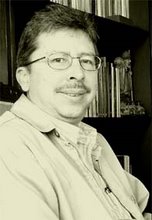
By Harold Segura
Either the Pope made a mistake, or President Chávez of Venezuela doesn’t know how to read. At the inaugural address of the Conference, Benedict XVI uttered an expression that has caused disturbance in the past few days and that forced a special vote within the Assembly. What the Pope said was that “the announcement of Jesus and His Gospel did not involve, at any time, an alienation of pre-Columbian cultures, nor was it an imposition of an extraneous culture.” He also added a phrase about indigenous religiosity that aggravated the situation. He said it was utopian “to bring to life pre-Columbian religions” because that, without Christ and the Catholic Church, “would not be an advance but a step back.”
Protests began to be heard immediately. The Confederation of Peoples of the Kichwa Nationality, in Ecuador, protested; so did, among others, a group of Indian leaders from Brazil, which qualified the Pope’s comments as “arrogant and disrespectful”. But the one who most captured the attention of the media (an area in which he is considered to be an expert) was President Hugo R. Chávez Frías of Venezuela. He said: “What happened here was much more serious than the holocaust of World War II, and nobody can deny that truth to us (…); not even His Holiness can come here, to our own land, to deny the holocaust of the Indians.” And, among applauses, the public asked that the top leader of the Catholic Church apologize. “So, as a head of State, but clothed with the humility (…) of a Venezuelan peasant (…), I request His Holiness to offer his apologies to the peoples of our America,” he added. Benedict XVI asserted last Sunday in Brazil that the evangelization of the Americas “did not involve, at any time, an alienation of pre-Columbian cultures, nor was it an imposition of an extraneous culture.” (The video with the speech of the Venezuelan President can be watched at: http://www.youtube.com/watch?v=GdLLIUj72yA )
As I said before, the Assembly of Aparecida has considered this fact among its deliberations. After contemplating several alternatives, the decision was to delegate a spokesman, Cardinal Julio Terrazas Sandoval (Bolivia) to appear before the media to offer a press conference in order to clarify what the Pope had actually meant. So today, as a German journalist with whom I talked at noon informed me, the Cardinal fulfilled this difficult task. For his part, the Archbishop of Caracas, Cardinal Jorge Urosa Savino, told a Salvadoran newspaper that Chávez “has not read well” the address in his concern to “introduce a confrontation between the Venezuelan people and the Holy Father.”
For me, this has been the best way to prove in situ what infallibility consists of. During lunch, by coincidence, Cardinal Terrazas and two other bishops sat at the same table as myself. The Cardinal sincerely believes that the Pope didn’t mean what he said. I believe in his sincerity.
Infallibility is a dogma declared by Pius IX and approved by Vatican Council I in the late 19th century. It is explained as a grace received by the Pope when he solemnly intends to define a doctrine in matters of faith or morals; in other words, when he speaks ex cathedra. But infallibility doesn’t involve inerrancy, that is, that he cannot make mistakes in any subject; neither when he simply gives his opinion on some issue, and much less that he is free of sin (the latter is easier to understand). Consequently, in strict doctrine, the bishops at Aparecida could have said that the Pope did make a mistake. In the last instance, he’s not inerrant. But—would it be politically correct to accept a mistake by the Pope? No. So, in practice, I now understand that infallibility and inerrancy end up being the same thing—the Pope doesn’t make mistakes, not even when he makes mistakes.
Harold
martes, 29 de mayo de 2007
 THE POPE DOESN’T MAKE MISTAKES

SEVEN, THE PERFECT NUMBER — THIS TIME ALSO?
Tuesday, May 22, 2007
By Harold Segura
The work of today, Tuesday, now began with the topics approved. I thought this would take a little longer, but now we have it. With 104 votes in favor and 27 against, a decision was made as to the work outline and the possible table of contents of the Final Document. Can the “seeing – judging – acting” method I mentioned earlier be recognized here? The seven topics are:
1. The present day of Latin America and the Caribbean:
1.1 The change in ages; socio-cultural situation; ecological damage; demographic situation; anthropological vision; economy and globalization; political situation; indigenous and afro-originated cultures.
1.2 The church at this time.
2. The joy of being disciples and missionaries of Jesus Christ:
2.1 The initiative of God the Father; the Gift of Jesus Christ; human brotherhood; the universal destiny of material resources; creation and ecological responsibility; the Gift of the Word.
2.2 Human dignity; family; life; hope.
3. Our vocation as disciples and missionaries:
3.1 Vocation to holiness: Christ comes to meet us; being configured to Him; taking the cross and following Him; announcing the Kingdom; spirituality.
3.2 Vocations in the service of the Church and the Kingdom
4. The community of disciples and missionaries of Jesus Christ:
4.1 The call to communion: Trinitarian communion; the Church as school and house of communion; gifts, ministries and charismata.
4.2 Places and structures of communion; popular religiosity; ecumenical and inter-faith dialogue; communion of the saints.
5. The itinerary of disciples and missionaries:
5.1 Trinitarian spirituality: Christ as the way, the truth and the life; docility to the Holy Spirit; places and times of encounter with Jesus Christ; spirituality and practice of justice; the Virgin Mary and the Saints;
5.2 Formation of disciples; catechesis; spiritual accompaniment; Catholic education; seminaries; ongoing formation; church movements.
6. The mission of disciples and missionaries
:6.1 General – New life in Christ, the continental mission.
6.2 Priority tasks: The family; helpless and threatened life; children and youth; justice; care for creation; the mass media; the poor and excluded.
7. Pastoral conversion and various areas of pastoral task: Church structures; pastoral plans; missio ad gentes (the mission to non-Christians); pastoral work for culture; urban pastoral work; Catholic universities.
I observe three major blocks: first, the context of mission (#1), then the subject of mission (#2, 3, 4, 5), and finally the task of mission (#6). When I observed this, I asked at the group—why so much interest in the subject of the mission, and not in its context or its task? Bishop Jiménez Carvajal (Colombia) answered that this emphasis on the Church (the subject of mission) is in fact deliberate. The intention at this Conference is to prioritize priests’ training, promotion of the laity, fraternal communion, the spirituality of disciples, the catechesis of all the faithful—in sum, to look more to the inside in order to be able to accomplish the task to the outside. This could be a return to the emphases of Puebla (1979). But let’s not go too far ahead—the list of topics is not everything. Now comes the development of sub-topics, and then we will know where the Catholic Church wants to go in the next decades.
Each one of the three observers “from the Reformation” will attend the following Commissions: Néstor Míguez will attend the one covering topic #1; Juan Sepúlveda, at topic #7, and myself at topic #6. These topics correspond to our requests of yesterday, when each participant expressed his/her topics of greatest concern. May I clarify that Ofelia Ortega traveled to Cuba on Monday to meet other urgent commitments in Cuba and Germany; something similar happened with Dr. Walter Altmann, who left last week. The representative of the Anglican Church, Bishop Dexel Wellington Gómez, was not able to attend; and the representative of the Orthodox Church, Bishop Tarasios, attended for the first few days of the Conference and then left. That’s why I now refer to “the three representatives from the Reformation.”
Well, let’s hope this outline of seven major topics will bring happy surprises. Seven is the perfect number—may it be so this time too.
Harold
...OR HAVE I BECOME FAR TOO OPTIMISTIC?
Monday, May 21, 2007
By Harold Segura
The Aparecida Conference entered a new stage today. The Presidency submitted the first outline for Commissions’ work. According to the Rules, no participant may send working documents outside the meeting hall—only the press office can do that. I am respectfully abiding with that agreement. So I will limit myself to the most important, which is the analysis of contents.
The outline (a possible table of contents of the final document) consists of four pages and emerged from the Synthesis Document (the outcome of a discussion exercise in which thousands of Catholic men and women from all the Continent took part), Benedict XVI’s inaugural address, the speeches by the Presidents of Bishops’ Conferences and the contributions of the first group work carried out last week. With this document in hand, we went to the working groups.
I went again to group number seven. It is made up by eighteen people, including Jorge Cardinal Liberato Urosa (Venezuela), Bishop Angelico Sándalo (Brazil), Bishop António Celso de Queiroz (Brasil), Bishop Louis Kébreau (Haiti), Fr. Germán Cálix (Honduras) and Sister María de los Dolores Palancia (Vice-President of the Latin American Conference of the Religious, CLAR). The group was chaired by Jorge Enrique Jiménez Carvajal, Archbishop of Cartagena, Colombia. While we as Observers do not have speaking or voting rights, we are allowed to give our input at the Commissions. The Bishops have been very cordial in this.
The discussion focused on the logic of the outline. Those who are familiar with the coming and going of the Church in Latin America and the Caribbean know well the importance of the methodology of SEEING and JUDGING, in order to then ACT. I had already referred to this sequence before, and now I’m coming back to it because, between today and tomorrow, there will be a decision as to whether the Church will keep this dynamic that made it so current since the Second Conference in Medellín (1968) or, on the contrary, it will dilute its social commitments in the midst of doctrinal disquisitions. I intervened three or four times to say what I’m summing up below. I have seen substantial changes in the three structures that I have received up to now. In the Participation Document I came across the “seeing, judging and acting” method (it was at least stated); in the Synthesis Document this sequence had taken on a Trinitarian presentation (seeing with the eyes of the Father, judging with the invitation of the Son, and acting under the influx of the Spirit), but now the sequence is lost between a brief look at reality, an extensive look at the Church and a short projection into the Mission. So it seems, in my opinion, that what is of the most interest to the Church is—the Church itself.
One of the Bishops thanked me for this perspective, and a few others took it as a point of reference for other comments. In the meantime, an elderly Brazilian bishop who was seating next to me said to me, not without malice—“Seeing, judging and acting is Liberation Theology.” And then he added even with more malice, looking at me above the thick lenses of his eyeglasses, “And they don’t want to hear anything about that in this place. Unfortunately.”
Will the Conference give an acute look at reality, leading to renewed commitments? Will there be a return to the past to assert the Eucharistic doctrine and the liturgy of Pius V? Judging by the atmosphere I can breathe in the hallways (they have told me that there are some thirty-five “avant-garde bishops”), the final outline will be more progressive than the one submitted this morning. They will see in order to judge, and they will judge in order to act as disciples and missionaries. …Or have I perhaps become far too optimistic?
PD: You will find attached "those from the Reformation"'s speech.
Harold
Greeting by the Observers from the Evangelical Tradition at CELAM’s V General Assembly
Dearly beloved Cardinals, Bishops, priests, brothers and sisters: First of all, we would like to express our gratefulness and appreciation for the invitation received from Cardinal Walter Kasper, President of the Pontifical Council for the Promotion of Christian Unity, in the name of Pope Benedict XVI, which has made it possible for us to come alongside all of you at this grand event in our condition as observers. This follows up on the initiative of Pope John XXIII, who invited observers from other Christian churches and confessions to attend Vatican Council II. One of them was a Latin American, Dr. José Míguez Bonino. We trust that this continuity, which is also expressed in bilateral dialogues between the Roman Catholic Church and several of the Churches we come from, and in the Mixed Working Commission between your Church and the World Council of Churches, will be a sign and an announcement of a greater and better ecumenical cooperation in our continent, which is so much in need of signs of understanding, of mutual acceptance and of fraternal re-encountering.
Since the beginning of this Conference we have felt encouraged and challenged by the call issued by Pope Benedict XVI to build the new missionary awakening required by our Latin America and the Caribbean upon the reading and deep knowledge of the God’s Word. There are two passages in this Word that help us to interpret the meaning of our presence among you. We recall those words of Jesus, when he asserts that “he who is not with me is against me” (Mt 12:30), which point out that it is only around Jesus, the Christ, that we can find the focus of our unity. In a complementary text, when, having learned of someone who cast out demons in Jesus’ name, and when the disciples wanted to forbid this man from continuing to do so because he was not one of them, Jesus told John: “Do not stop him. No one who does a miracle in my name can in the next moment say anything bad about me, for whoever is not against us is for us” (Mk 9:39-40). Despite the historical and doctrinal differences which, painfully, make it impossible for us to participate together at the Communion Table, these texts allow us to assert that we are united to all of you by Jesus’ call to proclaim and celebrate the abundant life that our peoples are so much in need of.
We cannot but acknowledge the testimony and prominence of the Roman Catholic Church in the evangelization of this American continent of ours. Guided by the Spirit of God and His Word, beyond the ambiguities of historical circumstances, exemplary men and women, faithful disciples and missionaries of the Lord, have planted the Word in this continent, and have built communities that have been at the service of the neediest in Christ’s name, have witnessed to the inspiration of the Holy Spirit in their words and deeds, and have faithfully celebrated the Triune God. This Catholic presence has resulted in a faith that is rich in religious expressions, that have succeeded in allowing Christ’s message to take deep roots in the various cultures present in our continent, both the indigenous ones and those originated in later immigration, which have contribute towards shaping the beautifully diverse faces of our peoples in Latin America and the Caribbean.
Our Evangelical churches have collaborated too, especially after the processes of national emancipation in the continent, in the construction of the witness to Christ in these lands, either through immigrant communities that have brought with them the faith of their fathers, or through various efforts at evangelization, which have not been deprived, in turn, of contradictions and ambiguities. But many faithful believers of the Evangelical faith have collaborated in the evangelization and the culture of these lands, in some cases even shedding their own blood as martyrs in defense of the dignity and justice of our peoples.
In order to prevent this diverse Christian presence from being marked by confrontation and competition, but rather by the common call to be disciples and missionaries of our Lord Jesus Christ, we think it is necessary to use a language that will make it possible to keep the channels of communication that are already in place, and even to open new bridges. Recognizing each other as Christian Churches and Communities is the way to keep open the doors to dialogue—a dialogue which is indispensable in order to expel, all of us together, any sectarian or belligerent practice that works against the genuine missionary spirit.
Guided by the Spirit of God, we will have to learn to know and recognize each other more and more as parts of the one and multiple people of God, debtors to His manifold grace. We have been called to grow in the unity in diversity to which we are called by the Lord, so that, in mutual respect, in love, encountering each other in the ways of faith, we might proclaim His holy Name, and in Him, as disciples and missionaries coming from different traditions and ways of expressing our faith, to announce fullness of life for our peoples.
Ofelia Ortega
Juan Sepúlveda
Harold Segura
Néstor Míguez
Walter Altmann
Aparecida, May, 2007
FROM THE METHODIST SERVICE TO FREI GALVÃO’S HOUSE
By Harold Segura
It is my habit, when I’m traveling, that one of the first things I do when I arrive in a hotel is to ask for a telephone book and look for two references—the closes theological bookstores and Baptist churches (in that order). By the way, I increasingly find that there are more bookstores than Baptist churches. I rejoice at the former, but I’m concerned at the latter. But let’s go on. I did my usual exercise in Aparecida the very day I arrived. I found two bookstores, the Livraria Paulus and the Livraria e Locadora Católica. I visited both of them the same day because I still had time and because they were very close to Hotel Panorámico. As to the Baptist churches, I only found one, the Igreja Batista Renovada Monte Gerizim, so I noted down the address and telephone number and then I realized it was not in Aparecida at all, but in Cruzeiro, several kilometers from here. So when I was in São Paulo and met with Dr. Geoval Jacinto da Silva, Bishop of the Methodist Church, I asked him to find the address of one of his churches. He was very kind, and not only found the address, but also asked a family he knew to pick me up with their car on Sunday and take me to Guaratinguetá, a city with approximately one hundred thousand inhabitants, close to Aparecida. So today, on Sunday, I celebrated my faith together with new friends at the First Methodist Church in that city.
As we left the church, the family that welcomed me were very affectionate and, before taking me to a restaurant (a noble custom of evangelical families with visiting pastors), they wanted me to visit the house of the man who was formerly called Frei (Friar) Galvão and now, after last week’s canonization, is better known as Santo António de Santana Galvão. To my surprise, I was right at the city where this first Brazilian saint had been born. So there we went. It’s a simple white house with blue windows, where he was born in 1739. It has two stories, the lower one with relics of the Franciscan brother, among them a tiny piece of one of his habits, and then pictures that summarize his life, the original nails with which the first doors had been built, and even the key locks used by the friar in his time.
Before coming in, I decided to take a picture from the outside of the house. I was in that operation, when a man came close to me with much kindness—it was Fr. José Pietrobom Rotta, the parish priest of the Cathedral in the city and one of the twenty-four diocesan priests who are participating at the V Conference. “Pastor,” he said, “how glad I am to see you here.” He was surprised to see a Protestant minister among the pilgrims. He accompanied me to the inside of the house and there he introduced to me a sixth-degree woman cousin and a seventh-degree man cousin of the saint (he was that accurate). They all seemed to be very happy with my visit. They said to each other, “He’s a Baptist pastor who is attending the Conference in Aparecida.” The man cousin didn’t want me to leave without signing the guestbook. There was some laughter (I asked the parish priest whether Frei Galvão hadn’t been a Methodist, by chance), as well as friendly photographs and farewell hugs.
Well, so why am I telling such a personal story? I want to record it, first of all, because that’s what happened on Sunday. There’s no more to tell because the Conference held no sessions today. And second, because I think this is a small sample of the significance of daily encounters between people who are different in their faith. Ecumenism is not a mere issue for specialized theologians who shut themselves in behind a cloister wall to decipher the mysteries that separate them, and to come to sometimes cleverly phrased agreements. Ecumenism has this other dimension—that of daily life, of respect among those who don’t believe the same things, of easy friendship between those who are different, of courtesy, which is a sign of charity and an encouragement for a new world. Didn’t we have enough time in former years to abuse each other and to be intolerant on account of our faith? Without giving up our faith, we can leave our hatred behind and give witness to reconciliation. That too should be addressed at the V Conference.
Harold
THE SEVEN MINUTES FOR “THOSE FROM THE REFORMATION”
By Harold Segura
We already knew that the Presidency had granted us five minutes so that the “representatives from the Reformation” could present a greeting and a few brief words concerning our participation. So this is how we went—Dr. Néstor Míguez (Argentina) wrote the first draft, and on that basis the rest of the group, Dr. Juan Sepúlveda (Chile), Dr. Ofelia Ortega (Cuba) and yours truly, made additions and other supplements. The second draft was finalized during the 6:00 p.m. break yesterday, Friday. All that was left, then, was to go over it during the weekend and send an electronic copy to Dr. Walter Altmann (Brazil) for him to get acquainted with it and give any other input. So we came again into the meeting room to participate in the last session of the day.
But—surprise! The Secretary announced that, during the next few minutes, the assembly would listen to the speeches from church movements, the laity, the religious, the diocesan priests and the observers “from the Reformation”. We stared at each other in surprise. The review was not over yet, we didn’t have a printed copy, and we had not delivered the text to the translators or to the Secretariat. So, between rushes and enthusiasm, we did what was left during the next five minutes. Juan looked for a printer while Ofelia, Néstor and myself decided who was going to speak. “You do it,” said Néstor looking at me, “because you brought your jacket and tie.” “No,” Ofelia and I said, “you speak and please mention the fact that your father was an observer at Vatican II and at the Bishops’ Conference in Medellín.”
The Archbishop of São Paulo and one of the General Secretaries of the Conference, Odilio Scherer, announced our turn and asked the representatives of the laywomen to please prepare themselves to speak after us. Néstor came to the front, introduced himself and read the text we had agreed on. (See the full text on the appended document.) When he had been speaking for four minutes, the traffic light turned on announcing his time had come to an end, but Néstor didn’t see it. It’s hard to see because, due to a mistake by the organizers, the light faces the audience and the speaker doesn’t see it. When we saw the red light, the microphone lost its volume. There came a few seconds of silence, interrupted by Cardinal Errázuriz to say, “Pastor, go ahead. Take as much time as you need.” This has been the only exception made ever since the Conference began a week ago.
But there was still another gesture of ecumenical courtesy, at the end of the speech (which didn’t take more than seven minutes): the Assembly applauded as they hadn’t done before for any other speaker. It was the longest, most enthusiastic applause. And the applause was reinforced with words of gratefulness and kind greetings to the four evangelical observers both yesterday and today. This applause marked a good end to our first week. The applause could translate into something more important when the working sub-topics come to be considered. It is possible that ecumenism and inter-faith dialogue won’t be left out. Patience has been rewarded.
Harold
BETWEEN A COLD AND A CHANGE OF PACE
By Harold Segura
Ever since I arrived in Aparecida I knew I was going to have troubles with the weather. I was expecting heat, but it was cold. My first outing around the small city was in order to get warm clothes, but fortunately I didn’t find any… which was better because it was very hot the next day. The weather changes very frequently and this surprises us. A priest friend (who is Colombian like me) told me this morning that the week before the Pope came, temperature had gone from 10º C (50º F) in the morning to 34º C (93º F) at noon. That can make the strongest person sick. And that’s what has happened. The sessions this morning took place among sneezes and the uneasiness of colds.
But there are also other changes that, even if sharp, are certainly very positive. There was a change in the pace of the meetings, and we moved from the speeches (which are only speeches, no matter how important) to working group sessions. The first theme unit was named “The Current Times” and has to do with an analysis of the reality of our Continent. The methodology agreed is well-known for Latin American theology and pastoral work—first “seeing”, then “judging”, and finally “acting.” So we started by “seeing” what is going on in the Region and its implications for discipleship and mission.
To begin, a bishop presents a short position paper which is followed by two responses. With this initial input, we divide into groups of fifteen to twenty people. Fifteen groups were formed in total. Mine, for example, is number seven. Each group appoints a redactor in charge of writing a synthesis of the contributions. With this synthesis, the group then meets two other groups and the three of them develop an integrated synthesis. The session rules call this method “the grid working system.” The syntheses developed yesterday were presented today. Almost all groups gave an overview of the social, cultural and ecclesial reality. They mentioned globalization, poverty, the crisis of institutions, ecological aggression, disappointment with democratic systems, inequality, drug traffic, corruption and other issues that give a good description of our landscape. After receiving the outcome of group work, the session is opened for participation by those bishops who want to take part. These interventions need to have been previously requested to the Presidency and are submitted in writing. This ensures order and the quality of the interventions.
Today we listened to eleven interventions that pointed out gaps in the work of groups. The interventions asked for more specific mentions of the Indian world, the environment, drug traffic, inter-cultural and inter-faith dialogue, the family, seniors and children. The now usual allusion to “Protestant proselytism” could not be absent—a reference that should not upset us if, in the end, we come to fraternal agreements (we hope the term “Protestant sects” will not be used any more, and will be replaced by “church communities” or “Christian communities”) so that we can work together in overcoming the most pressing evils. In the face of such blatant denials of life, we all need to join efforts. Inhuman poverty, for instance, has no favoritisms—it’s everyone’s problem, and we all can fight it together. The evils of the world are like a cold, that makes no distinction of beliefs.
Harold